
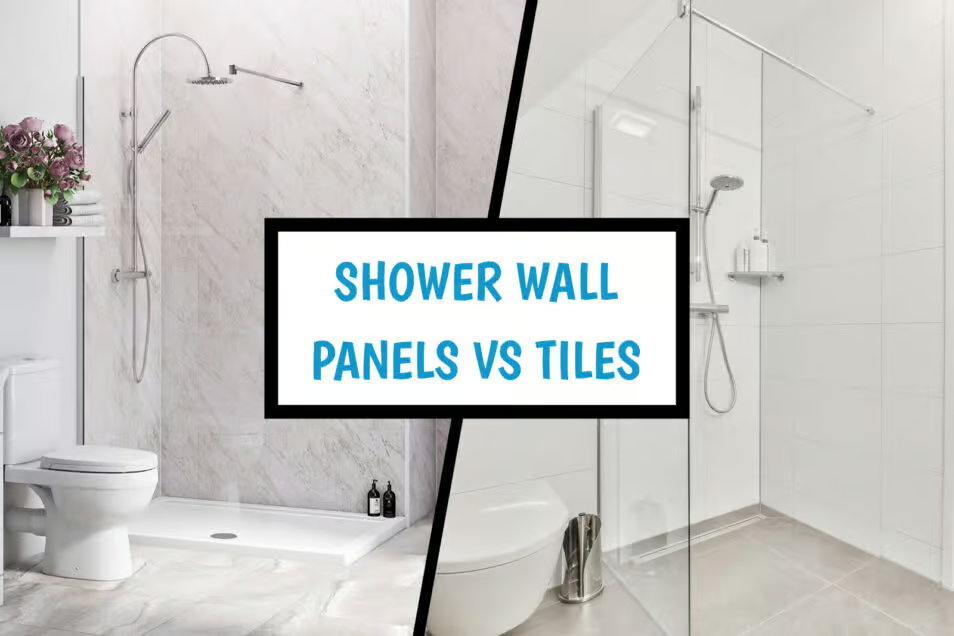
You recently remodeled your bathroom, and six months later, you discover that the tiles are beginning to fracture and the grout lines are turning black. Frustrating, right? The wrong choice of material for your shower walls can quickly turn your dream bathroom into a maintenance nightmare. That’s exactly why the debate around Wall Panels vs Tiles has become so important for homeowners who want a balance between durability, style, and long-term performance.
This is the reason why the debate concerning the shower wall panel or tiles has been boiling down within the renovation sector. Whether you, as a house owner, are on your first remodel or as an interior designer, who has a customer to help, it is the knowledge of the actual material, which will stand the time, anxiety, and numerous headaches, that will save you time, anxiety, and headaches in the future.
What are Waterproof shower wall panels?
Shower wall panels are solid and waterproof, big sheets that you apply to cover your shower walls without any gaps or lines of grout. They also come in several popular varieties:
- PVC panels: Lightweight, inexpensive, and one hundred percent waterproof.
- Acrylic panels: Glossy and smooth, and easily wiped.
- Composite panels: A blend of strong materials and a trendy one.
The uniqueness of these panels is that they are smooth-surfaced. There is no place where water can creep in and destroy properties, as there are no lines between the grouts. Panels would be an excellent option when you wish to get showering surfaces that are easy to wash and do not need attention. This is one of the key advantages often highlighted in discussions about PVC bathroom wall panels vs. tiles, where the seamless finish of panels offers a more hygienic and low-maintenance alternative to traditional tiled surfaces.
Classical Style and Multipurpose Shower Tiles
Tiles are always well-grounded. They are gorgeous and offer unimaginable designs. The common materials of tiles used include:
- Ceramic tiles are widely accessible and reasonably priced.
- Compared to ceramic tiles, porcelain tiles are more water-resistant.
- Natural stone is lovely, but it needs to be sealed and maintained.
It is hard to match tiles in terms of beauty. You can mix colors, create designs, and customize your shower to create the look of one at a five-star hotel. The interior designers consider tiles, giving them the artistic liberty that the panels will never achieve.
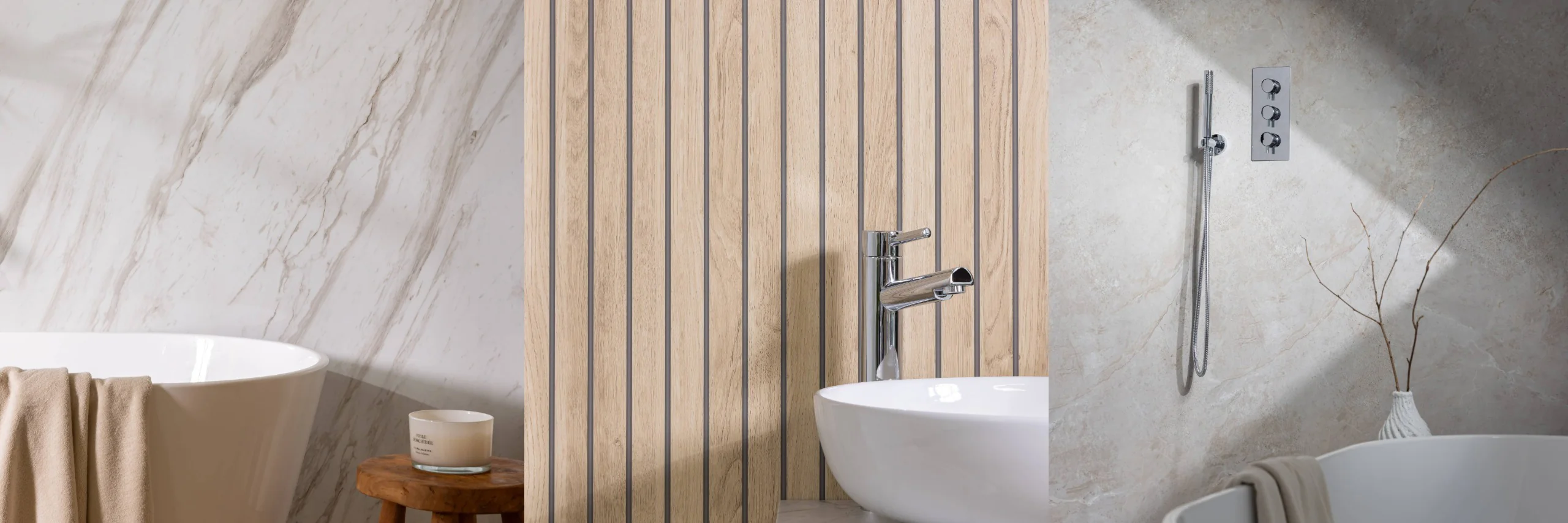
Comparison of Tiles and Shower Wall Panels Durability.
Here is a quick comparison of Wall Panels vs Tiles to help you understand the key differences at a glance:
| Feature | Wall Panels | Tiles |
|---|---|---|
| Waterproofing | 100% waterproof, no grout lines | Tiles are water-resistant, and grout absorbs moisture |
| Maintenance | Low maintenance, easy wipe cleaning | Requires grout cleaning and sealing |
| Mold Resistance | High resistance (no grout lines) | Mold can grow in grout lines |
| Installation Time | Quick and easy installation | Time-consuming and labor-intensive |
| Installation Cost | Generally lower labor cost | Higher due to detailed labor work |
| Design Flexibility | Modern finishes available | Highly customizable patterns and styles |
| Durability | Impact-resistant and long-lasting | Durable, but the grout may crack over time |
| Renovation Friendly | Can be installed over existing tiles | Old tiles usually need removal |
These two options are good in terms of durable wall materials in the bathroom.
- Water and Moisture Resistance.
This is one of the victories of bathroom waterproof panels. Being made of solid and non-porous materials, they do not give water a chance of entering through the surface. Tiles are not waterproof, and the grout is. Grout is dry in the long run, and hence, it dries up moisture, consequently causing an increase in molds and structural damage.
- Cracking and Wear
The tiles can break down in case of a heavy object dropped on them or the slight movement of the wall. Nevertheless, a single failed tile can be replaced easily, but in the majority of situations, the entire project is bigger than it was expected to be. The panels are also impact-resistant and flexible, hence the probability of cracking caused by normal usage within the bathroom is minimal.
- Mold Resistance
The wall panels that are resistant to mold come here. Mold and mildew do not have a playing field, as there are no grout lines. The grout, when not well maintained, when combined with tiles, can be molded in a matter of a few months, especially in rainy climates.
- Installation Cost and Factors.
The installation of tiles is more costly because it involves work that is more detailed in nature. Tiling entails precision, concrete, grouting, and coating, all of which are artistic practices.
Panels are also typically quicker to use and, in some cases, can even be installed over the existing tiles, thus saving the demolition expenses. Though the material expense at the front end may be a variable, the long-term savings on the maintenance and repair costs are one of the title panels that justifies itself.
Which Option is more durable?
There will be the lastingness of the panels in terms of their appearance and waterproofness. Waterproof shower walls would last several years before wearing out and would not require replacement, unlike the tiled shower, which would require the grout to be repaired, sealed, and, in some cases, replacement of the tiles in a few years.
The final thing is that tiles, too, can survive just as long as they are well-maintained regularly.
Panels will suit better than tiles when:
- Maintenance is ranked lowly.
- The humidity in the surroundings of the bathroom is very high.
- You want to speedily and cleanly install it.
The superior choice is tiles, and they are:
- The most significant are the special design and beauty.
- You are left with an uneven wall to deal with.
- Elegant furnishings are very instrumental in the resale value of the home.
Conclusion
At the end, both solutions may be effective; it is a question of which one you feel is the most important. It is hard to find a match with a waterproof shower wall panel in case you are in need of something resilient, easily cleanable, and that will not complain when faced with the daily water splashes. Another traditional option is the use of tiles, yet they can also demand a slight amount of extra maintenance that cannot be cared for by a person who is interested in creative design.
Frequently Asked Questions
Q1: Waterproof Shower Wall Panels vs Tiles – which option is more durable?
Wall panels are generally more moisture-resistant because they do not have grout lines. Tiles are durable as well, but grout can crack or develop mold over time.
Q2: Are shower wall panels as good as the tiles?
Modern panels are being established. The majority of them either look like stone, marble, or wood and can be even more appealing to the eye than the usual tiles.
Q3: Can shower wall panels be placed on the existing tiles?
Yes, in many cases you can. This is the reason why panels are so ideal when it comes to renovations, where one would not want to get made and waste money in removing the old tiles.
Q4: How can I prevent the growth of mold in a tiled shower?
Some of the ways of downplaying mould are frequent sealing of grout, good ventilation, and thorough cleaning. However, this issue can be more effectively eliminated with the replacement of the wall panels with those that are non-moldy.
Q5: Which of the 2 is easier to wash: shower panels or tiles?
The cleaning of shower panels is much easier. All that is normally required is a wipe-down, and the tiles should be scrubbed and resealed with grout regularly to maintain a clean appearance.
Follow us on Facebook for more details.